Product Design
User Experience
A Decision-Ready Interface for India's Public Procurement Platform

The client came to us frustrated,
Can users engage with GeM without fighting the portal every time they need to understand something?
My answer was to stop treating GeM as the interface, and start treating it as a data source. I extracted, consolidated, and re-architected GeM's data into an AI-powered layer alongside the portal. It collects bid patterns, flags relevant opportunities, and keeps users out of GeM entirely until they're ready to apply.
My Role
Product Design, UX Design, User Flows, Wireframing,
Team
1 UX Designer, 1 Team Lead,
1 UI Designer
Timeline
2 Months
Overview
Government e Marketplace (GeM) is an online, end-to-end digital procurement platform to facilitate the buying of common-use goods and services by government departments, PSUs, and autonomous bodies. It offers tools like e-bidding, reverse e-auction, and demand aggregation for best value.
We set out to create an AI powered solution to function on "top" of GeM, leveraging its data, but simplifying certain processes.
GOALS
What we wanted to accomplish
The goal here was to make processes that happen through GeM easier to use for MSMEs and to leverage the vast data available to understand the bidding process better. By consolidating data and making flows simpler, we wanted to make a predictive AI for applying to bids, that also eliminates repetitive tasks for the MSME user.
I was specifically assigned for the task of structuring the solution, creating converstional flows for major tasks, understanding and making data cohesive, and designing the product.
PROCESS
How we got here
The process for this project started with a deep dive into GeM and understanding how the user navigates it. I then did some data consolidation, restructuring and design.

Understood Portal
Went through the GeM portal to understand its functionality, users and usecases

Explored Key Flows
Watched Youtube tutorials and played around in the portal to understand the main flows

Created an Architecture
Created an architecture to map where all the flows/key data points are currently placed

Mapped Data Relationships
Re-architected data through strategic clustering and synthesis

Created Conversation Flow
Mapped user flows and added interventional AI flows to streamline operations
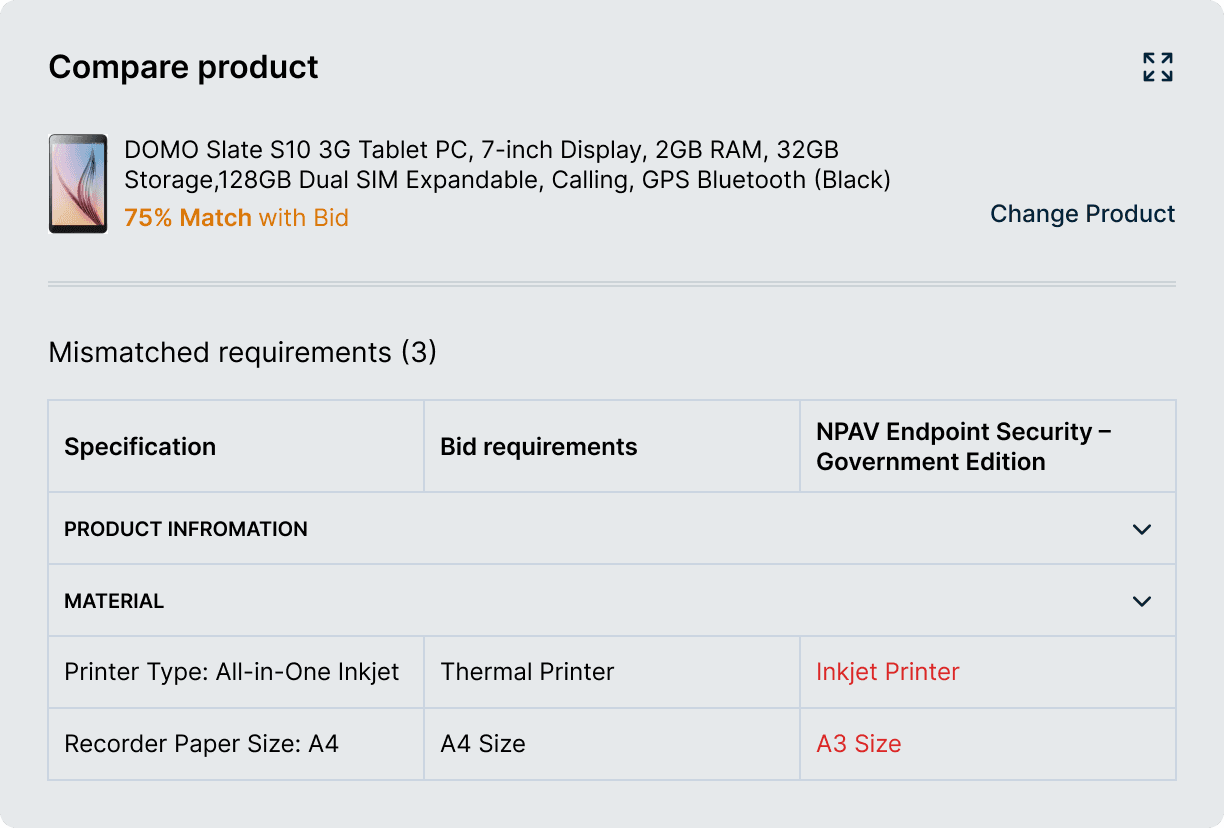
Created Widgets
Translated the portal screens to chat widgets in conversational AI flow
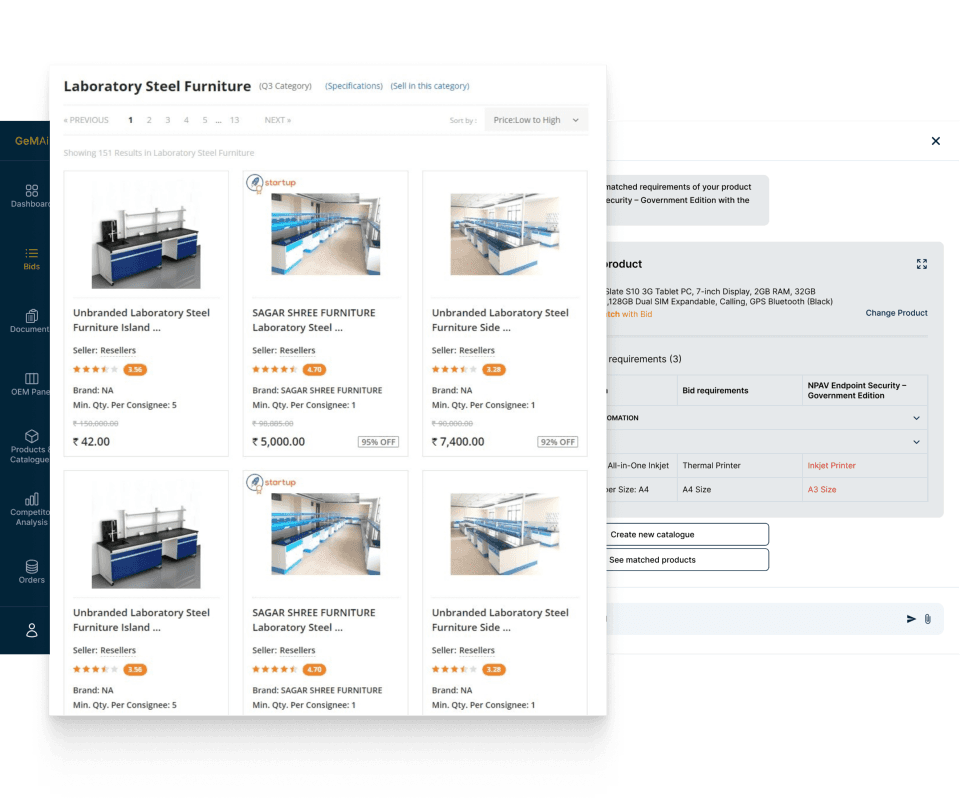
Faced Tech Constraints
Integrated GeM data into the chatbot via authenticated iframes for seamless access

Optimized data utility
Curated diverse data points for and high-impact AI powered predictive bid analysis.
UX Improvements for GeM Portal
PROBLEM
Disconnected Data
GeM portal had related data points all across the website. This made it hard for the user to understand or even find the relevant data to understand bid patterns and apply to bids with a winning chance. Some information got lost, and processes got skipped.
SOLUTION
Clubbed Flows and Sections
After finding this problem, I clubbed certain data points that were related and created a new architecture that could accommodate these together. Effectively reducing the mental load and number of screens user has to navigate through


PROBLEM
Unclear Search and Filters
The active bids have a very limited number of filters that feel very complex. It does not allow filtering with the most needed filters, which makes applying for bids a very tedious process.

SOLUTION
Chatbot and Revamped Search and Filters
With the AI bot, bid analysis, and revamped landing pages, relevant bids become easier to find. This, clubbed with the new filters make it easy to pinpoint the exact kind of bid the user is looking for


PROBLEM
No Consolidated Record of Past Data
Once bids are won or closed, they do not get saved in any separate repository. This makes it hard for users to see past bid data and understand the patterns behind past wins.
SOLUTION
Data Consolidation and Analysis to Assist in Bid Applications
The GeM portal has large datasets that can be utilised to smartly apply to bids. In this project - I figured out what data could be scraped from GeM and be consolidated to provide the user actionable insights, helping them increase winning chances for bids.


PROBLEM
No Clear Updates
There are no explicit updates given to the user when there is an update on bids, reseller statuses, etc
SOLUTION
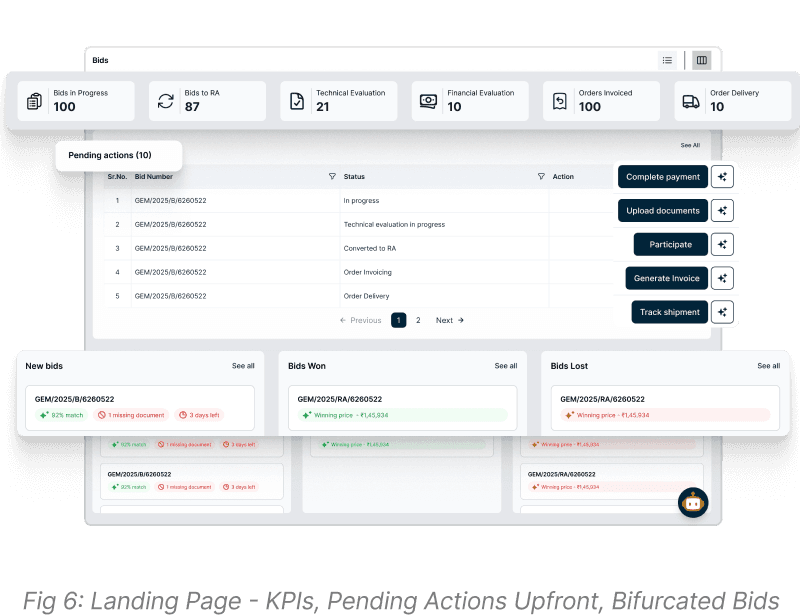
Dashboard and Scalable Table Layout
To solve this I restructured data and formatted it into easy to read and sort tables - where newest updates would dynamically come to the top of the list. This table format also allowed for scalability in actions and filtering/sorting data as per user needs. The application also has a dashboard to show important updates and notifications to the user when there is an update on any status that needs user attention.


PROBLEM
Hard to Sort Through Bulk and Understand Relevance
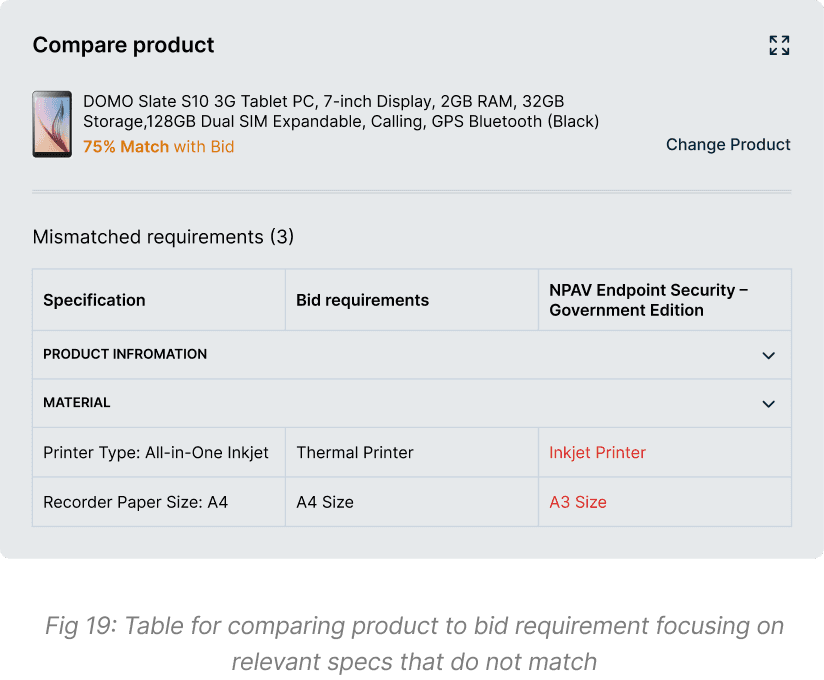
Often, relevant bids get lost in the list of active bids or bids converted to Reverse Auctions - which can be 10s of thousands in certain categories. Often the bids are shown even though relevant products user can sell is only one of the many bid requirements.
SOLUTION
To mitigate this I restructured the bid cards and added easily identifiable tags. Furthermore we structured the solution in such a way that the data scraping would reduce the need for user to be logged into GeM unless they are actively applying to a bid. Until the application starts, processed are kept within our solution.


PROBLEM
Various Types of Data and Separate Actions
Data was structured and placed based on what actions needed to be taken. This made making connections and understanding updates difficult for users.
SOLUTION
Found Ways to Make Data Consistent
While creating the solution I mindfully restructured the data and pulled only relevant data points to ensure standardisation.

PROBLEM
No Connect Between Online and Offline Processes
No connect between online & offline processes, like vendor assessment makes the user flow very disconnected and often certain opportunities get missed.
SOLUTION
Consolidation of Documents and Updates
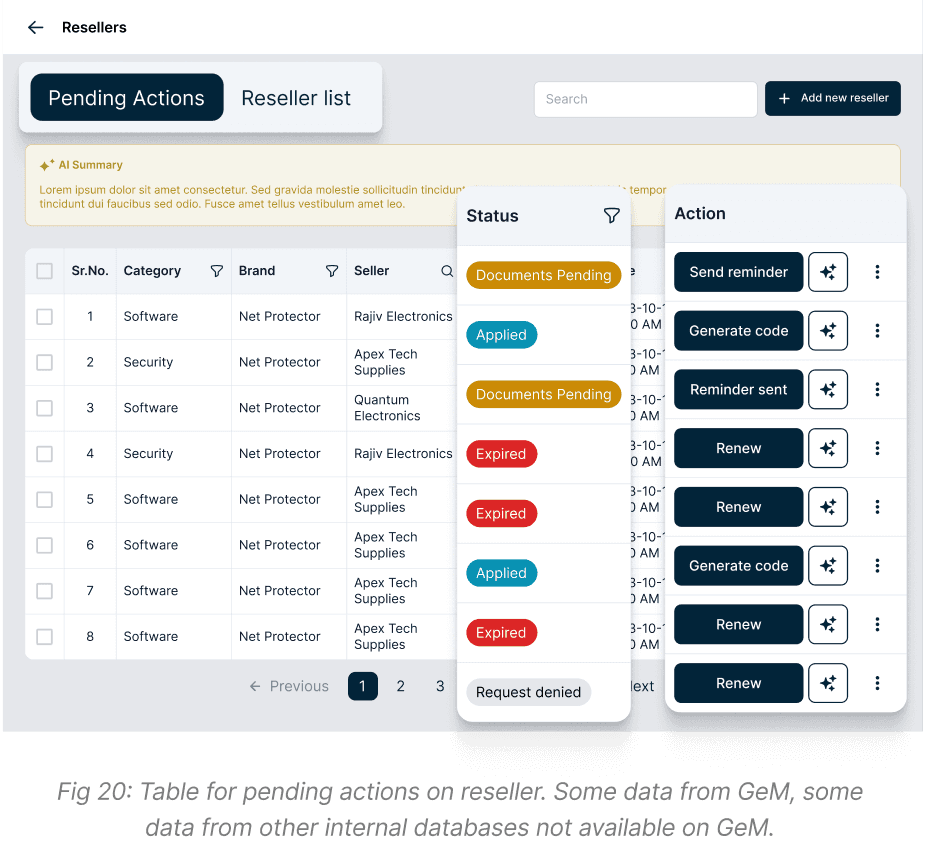
I solved this by creating integrating sources of the processes that happen outside of GeM. Vendor inquiries are now directly logged or reflected in the reseller authorisation table. All resellers are reflected in the same page, and can be filtered out based on varying statuses.
REFLECTION
What worked
The decision to minimise in-portal experience early became the clearest design principle I had. Once I framed GeM as a data source rather than a destination, every structure decision; how to cluster bids, when to surface AI analysis, etc had a clean answer. It also made the chatbot feel purposeful rather than decorative.
What I'd do differently
Run a technical spike on data accessibility before designing any features. The constraints around what could actually be scraped or accessed through authenticated iframes only surfaced after the conversation flows and widgets were already designed — which meant features had to be rethought once we knew what data we could and couldn't get to. Knowing the boundaries of the data earlier would have shaped the feature set from the start instead of forcing adjustments after the design work was done.